


Transitions test us. A career shift, a breakup, a move, a health issue, or a change in family roles can shake what once felt clear. In our experience, the hardest part is not always the change itself. It is the inner fog that follows.
Purpose can feel distant in these periods. Yet that does not mean it is gone. Purpose often becomes unstable during change because our old reference points no longer hold.
We have seen this many times. Someone says, “I know I need to move forward, but I do not know who I am in this new phase.” That sentence carries more than doubt. It carries grief, hope, fear, and a real need for orientation.
Change exposes what was hidden.
A recent analysis on how meaning in life has changed over the past few years shows that purpose is not fixed. It responds to life events, social pressure, loss, and growth. That is why we should not treat purpose as a rigid slogan. We should treat it as a living direction that needs care.
Below, we share seven practices that help stabilize purpose during transitions. They are simple, but not shallow. When practiced with honesty, they help us regain inner alignment.
Start by naming what is ending
Many people rush to ask, “What is next?” We think a better first question is, “What is over?” A transition becomes confusing when we try to carry an old identity into a new season.
Write down what is ending in clear language. It may be a role, a routine, a dream, or an image of yourself. Name it without drama. Name it without denial.
This first practice helps because it separates reality from fantasy. We stop negotiating with what has already changed.
- An old title or status
- A relationship pattern
- A version of success that no longer fits
When we name endings, we make space for honest purpose. That space matters.
Return to values before goals
During transitions, goals can become unstable very fast. Values tend to last longer. If we rebuild our direction around goals alone, we may feel lost again when circumstances shift.
Values give purpose a stable base when plans are still uncertain.
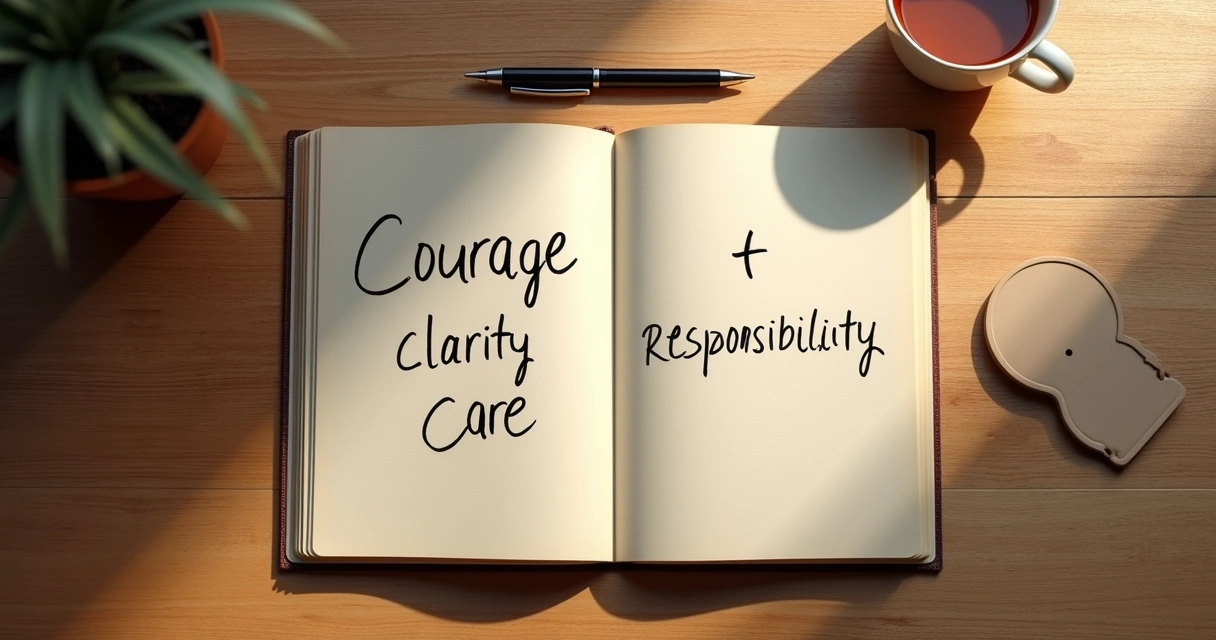
We suggest choosing three values that you want to keep visible in this phase. They might be truth, care, courage, service, learning, or responsibility. Then ask one practical question: “How can I live these values this week?”
This changes the tone of the transition. We stop waiting for the perfect future to act with integrity now.
If this reflection speaks to you, our thoughts on practical philosophy can deepen the way values shape action in real life.
Create a daily pause for inner observation
Purpose becomes unstable when noise takes over. News, opinions, urgency, and fear can all push us into reaction. We need a pause long enough to hear our own inner state.
This does not need to be complex. Sit in silence for ten minutes. Breathe slowly. Notice tension in the body. Ask, “What am I feeling?” Then ask, “What is this feeling asking me to see?”
We have noticed that people often confuse urgency with direction. They are not the same. One pushes. The other guides.
A regular pause supports emotional reading and self-regulation. It also reduces the risk of making life choices from temporary distress. If you want to keep developing this kind of inner attention, our reflections on consciousness may be useful.
Reduce identity to one honest sentence
In unstable periods, identity can become too large and too dramatic. We create stories such as, “I am failing,” or, “I have no direction anymore.” These sentences hurt because they sound final.
Try a simpler sentence instead. Something like, “I am in a season of rebuilding.” Or, “I am learning to act with clarity in uncertainty.”
This is not positive thinking. It is disciplined language. The words we repeat shape the way we stand inside change.
Clear words calm the mind.
One honest sentence can act like an anchor. Short. Real. Repeatable.
Stay close to emotionally mature people
Transitions expose our blind spots. We may normalize confusion, seek approval, or isolate ourselves. That is why human context matters. Not every voice helps.
Support is not just about comfort. It is about staying near people who help us face truth without collapse.
Choose a few people who listen well, ask good questions, and do not feed chaos. In our experience, mature company protects purpose because it helps us hold perspective.
This can be a friend, mentor, therapist, or reflective group. The point is not quantity. It is quality.
For those who want to strengthen this area, our content on emotional maturity offers useful perspectives on how relationships support conscious choices.
Take one small action that matches your direction
Purpose grows weaker when it stays abstract. We may think deeply and still feel stuck because nothing in daily life reflects our inner direction.
Choose one action that matches the person you want to be in this transition. It should be small enough to do now, not “someday.”
- Have one honest conversation
- Update one boundary
- Set aside twenty minutes for study or reflection
- Finish one pending decision
Small aligned actions restore trust in ourselves. We begin to feel that purpose is not only an idea. It is a way of moving.

Review what your life is rewarding
Sometimes we say we want one thing, but our routine rewards another. We may want peace while feeding constant stimulation. We may want meaning while saying yes to what drains us.
Ask yourself what your current life structure is reinforcing. This includes habits, environment, schedule, spending, and relationships.
If purpose feels unstable, there may be a hidden conflict between what we say matters and what we keep rewarding. This is where personal value becomes visible in action. Our reflections on human valuation can help widen this view beyond external measures.
Write a transition statement for this season
The final practice is to gather your clarity into a short statement. Not a life mission for all time. Just a sentence for this season.
For example: “In this transition, I choose to act with honesty, protect my energy, and build work that reflects my values.”
This statement should be specific, calm, and grounded in reality. Read it every morning for two weeks. Adjust if needed. A transition statement does not trap us. It steadies us.
We also believe it helps to learn from those who write and reflect from lived experience. You may enjoy the perspectives shared by the team behind these reflections.
Conclusion
Transitions do not remove purpose. They test its depth. When life changes, we need practices that bring us back to what is true, lived, and aligned. Naming endings, returning to values, observing inner states, using honest language, seeking mature support, acting in small ways, reviewing what life rewards, and writing a clear statement can all help.
Purpose becomes more stable when we stop trying to control the whole future and start aligning the present.
That is often how clarity returns. Quietly. Step by step.
Frequently asked questions
What is purpose during transitions?
Purpose during transitions is the sense of direction that helps us choose how to think, act, and relate while life is changing. It may shift in form, but it still points to what matters most.
How to stay focused during change?
We stay focused during change by reducing noise, keeping a daily pause for reflection, and choosing a few values to guide decisions. Small consistent actions also help keep attention on what is real.
Which practice is most effective?
The most effective practice is usually the one that restores honesty first. For some people, that means naming what is ending. For others, it means taking one small action that matches their values.
Why is purpose important in transitions?
Purpose matters in transitions because it gives coherence to uncertain periods. It helps us avoid reactive choices and supports decisions that match our deeper values and long-term direction.
How can I apply these practices?
You can apply these practices by starting with one at a time. Write what is ending, choose three values, create a short daily pause, and define one action for this week. Keep the process simple and honest.